While it may seem an archaic problem in today’s world of REDs and Blackmagic PYXIS cameras everywhere, and even cell phones that can shoot 24p HD, in the early 2000’s there simply were not digital cameras that were affordable and easy to use for quality 24p filmmaking. Sure, George Lucas had shot Star Wars II: Attack of the Clones digitally, but the Sony HDW-F900 CineAlta body cost $82,000; a full rig with lenses could easily run $250,000. Most camcorders were stuck in NTSC interlaced. Some filmmakers had used the PAL version of the Sony VX1000 and used deinterlacing and slowed the speed down to 24fps; but the resolution was only 720×480.
Add to the mix that there were still very few digital theaters at the time. Though it may be forgotten by many, in 2003 there were only 89 digital screens in the United States; all the rest were still running 35mm film exclusively. So back then even George Lucas had to have a film transfer to play in most theaters! Unfortunately, most tests of DV-to-film blowups were disappointing, with resolution below 16mm.
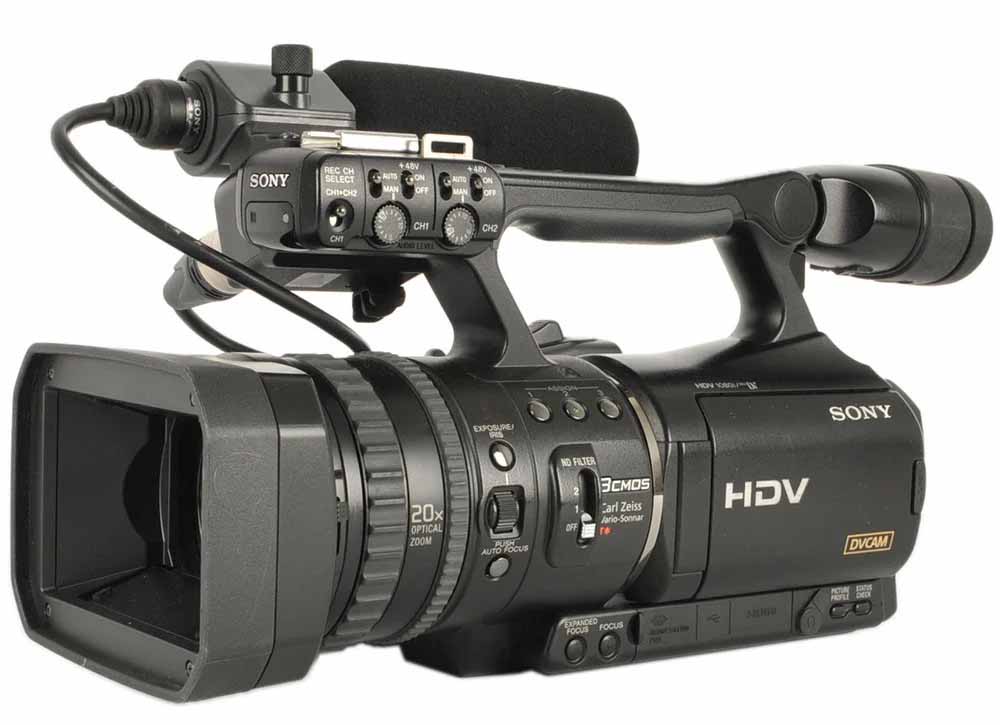 Then the new HDV format came out, using an anamorphic 1440×1080 format, presenting some new possibilities. Many low-budget filmmakers began wondering about shooting in HDV and blowing up to film: but how would it look? John Jackman decided to find out.
John was one of the lead writers for Digital Video Magazine, pitched the idea: why don’t we do a short film and test a film blowup, with professional film DPs evaluating the outcome? The editorial staff was interested, the National Association of Broadcasters was interested, the camera manufacturers were interested, and the theater owners were interested. Green light! But what to produce as a test? The budget was $1,000 – not much more than pizza budget. Everyone suggested a very short, simple film set in an office or apartment.
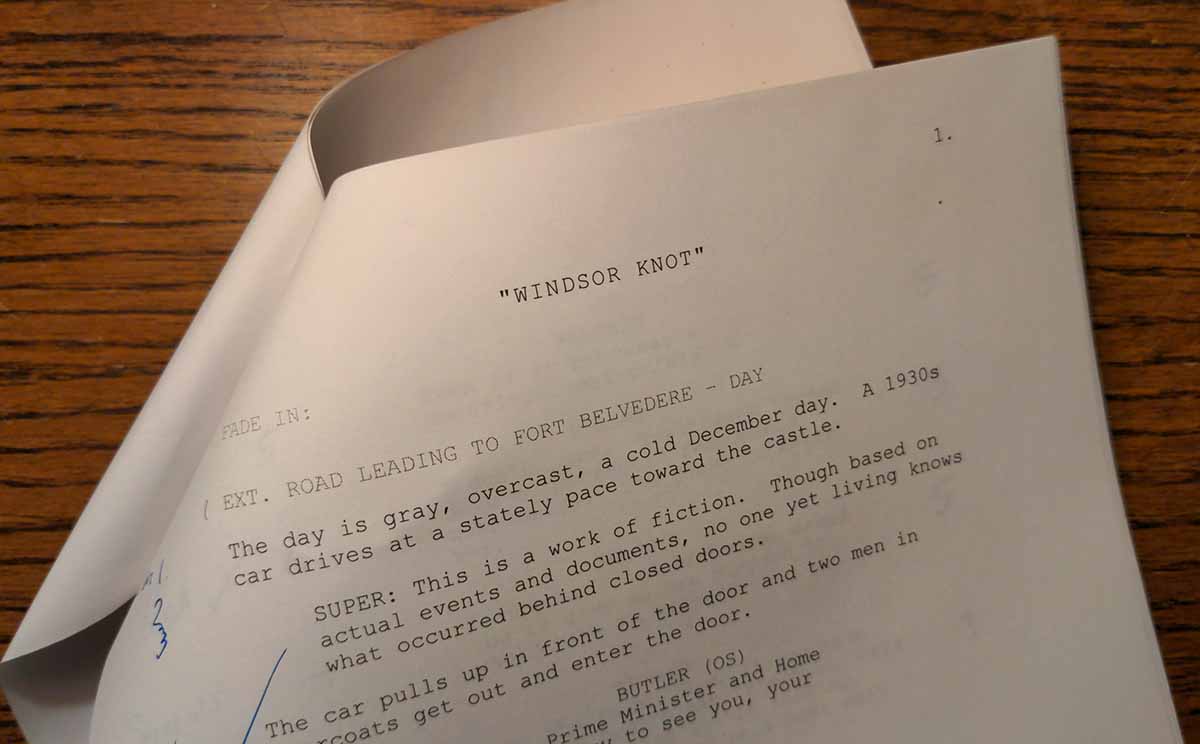 John pulled out the Windsor Knot script – and everyone said “You’re crazy! You want to produce a costumed period piece?” But John went to work. First was to find a location to stand in for Fort Belvedere, the castle residence of Edwards VIII. He reached out to SECCA, the Southeastern Center for Contemporary Art in Winston-Salem, NC, which is housed in the historic James Gordon Hanes mansion (a Norman Revival home built in 1929) and got permission from Karin Burnette, director of operations, to film there. He asked Karl Stimpson, a local antique car collector, to loan a period vehicle. He reached out to Tom DiNome in the PR office at Sony, and Sony loaned the latest Sony HVR-Z1U camera. He asked DV Film in Austin and Heavy Light Digital in New York about doing a test film transfer. Everyone lined up.
Post-production was a challenge as well, since Adobe Premiere could not handle HDV footage. We used Cineform’s Aspect HD plugin to handle the footage (now included in Premiere).
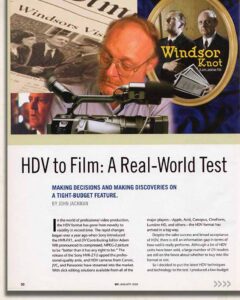
The end result was screened in the Gold Theater at the University of North Carolina School of the Arts, with three professional DPs scrutinizing the results. Their comments were folded into a feature article in the January 2006 issue of DV Magazine, which you can read here: