The Movie
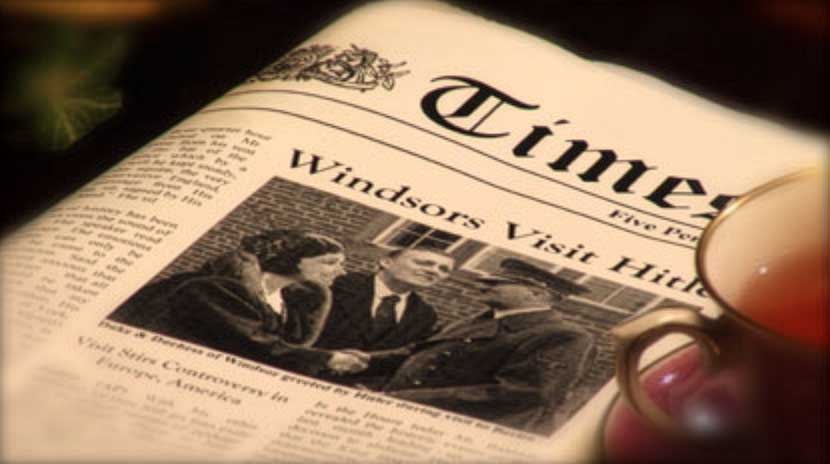
Filmmaker John Jackman had grown up hearing the romantic fairy tale of the “King Who Abdicated for Love.” This was the generally circulated story of Edward VIII and his paramour, Baltimore socialite Wallis Simpson. But in the late 1990s, previously suppressed records (including the Marburg Files) were released by the Public Record Office in London, revealing a much more sordid story. This planted a seed in John’s mind that eventually became the script of Windsor Knot.
Fast forward a couple of years, and in the technical field of digital video and filmmaking, a discussion was raging: could the new digital formats be used effectively for a proper feature film, which at that time also meant a 35mm film blowup (in 2003, very few theaters had converted to digital). This seems an almost archaic discussion now, but in the early 2000’s it was a very serious question for low-budget filmmakers.

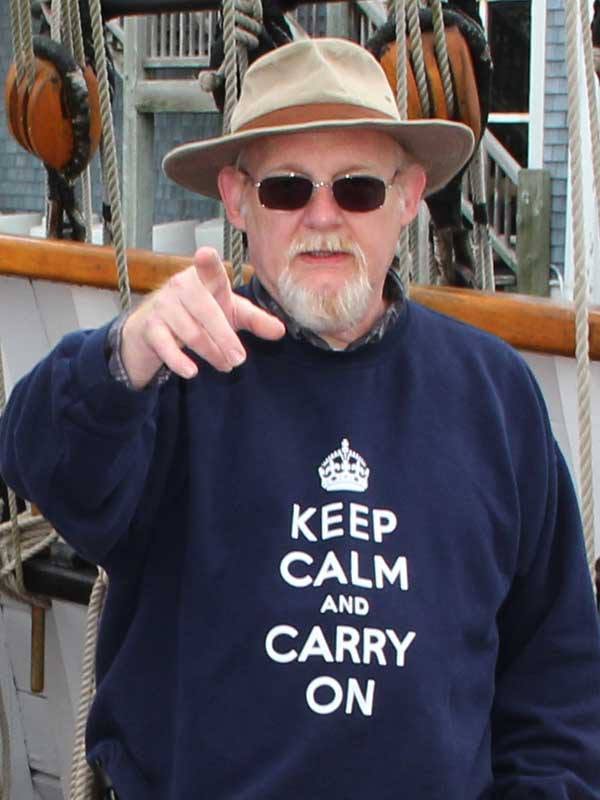
John Jackman directs the feature film Newton’s Grace on the deck of the good ship Hector in Nova Scotia.
John, who was one of the lead writers for Digital Video Magazine, had an idea: why don’t we do a short film and test a film blowup? The editorial staff was interested, the National Association of Broadcasters was interested, the camera manufacturers were interested, and the theater owners were interested. Green light! But what shall we produce as a test? The budget was $1,000 – not much more than pizza budget. Everyone suggested a very short, simple film set in an office or apartment.
John pulled out the Windsor Knot script – and everyone said “You’re crazy! You want to produce a costumed period piece?” But John went to work. First was to find a location to stand in for Fort Belvedere, the castle residence of Edward VIII. He reached out to SECCA, the Southeastern Center for Contemporary Art in Winston-Salem, NC, which is housed in the historic James Gordon Hanes mansion (a Norman Revival home built in 1929) and got permission from Karin Burnette, director of operations, to film there. He asked Karl Stimpson, a local antique car collector, to loan a period vehicle. He reached out to Tom DiNome in the PR office at Sony, and Sony loaned the latest Sony HVR-Z1U camera. He asked DV Film in Austin and Heavy Light Digital in New York about doing a test film transfer. Everyone lined up. Now all he had to do was produce the film!
Local actor Alton Cox was cast as Edward; radio personality and actor George Lee (Patch Adams, Matlock, Dawson’s Creek) was cast as Home Secretary John Simpson; and John himself played Prime Minister Stanley Baldwin. David Martin, a promising cinematography student at the University of North Carolina School of the Arts, was tagged to run the camera as director of photography.
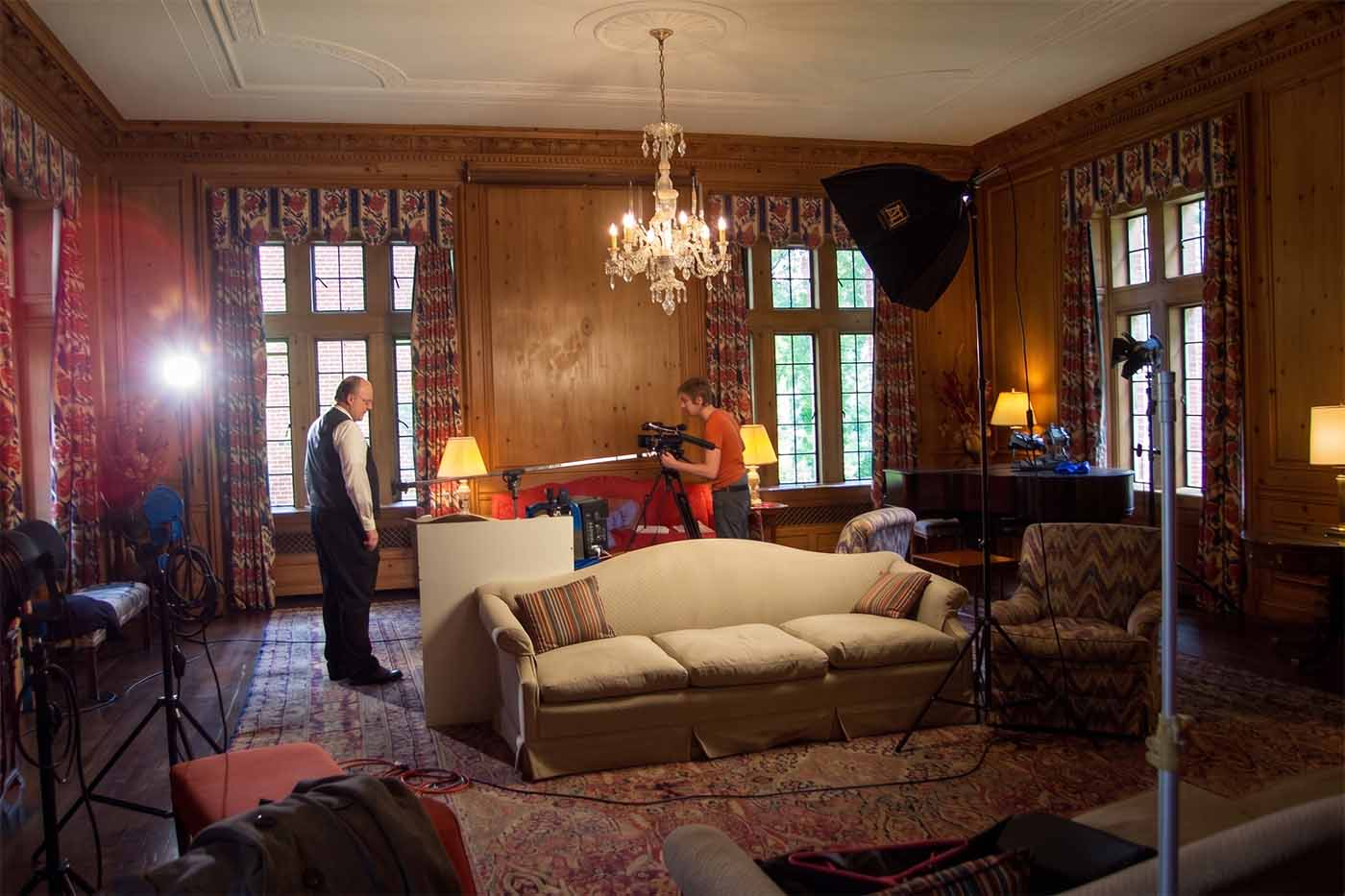
The short film was planned for just two locations – in front of the Hanes mansion for the arrival of Baldwin and Simpson and the living room of the magnificent mansion for the confrontation with Edward. The scenes were carefully blocked in advance to be able to shoot quickly with the tight schedule.
The film was shot in one day at the Hanes mansion, and was then edited on Adobe Premiere with CineForm plugin. The HDV camera was set to PAL HD format (25 frames per second), and later slowed down very slightly to 24fps (film rate) for film transfer. This very slight change is not noticeable to the audience. The finished digital file was sent off to two different labs for transfer to film. The results were then screened in the Gold Theater at the ACE Exhibition Complex at UNCSA, with a panel of experienced cinematographers to evaluate.
John Jackman wrote an extensive article which was featured in DV Magazine, and later the film version was featured at the 2005 National Association of Broadcasters (NAB) convention in Las Vegas as part of a workshop on digital-to-film transfer.
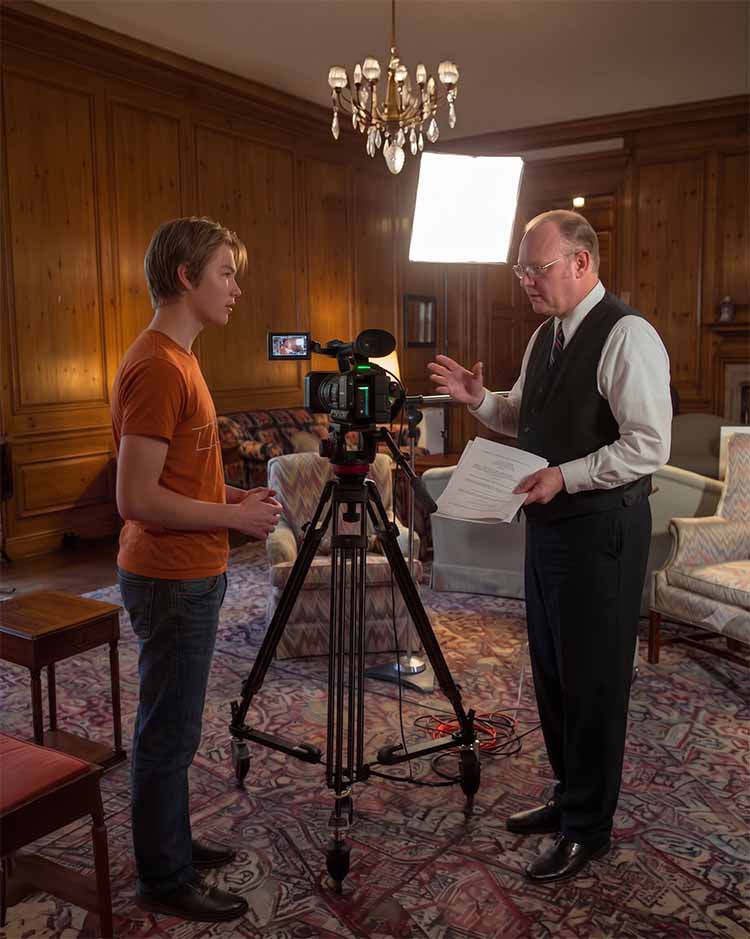
Director and DP Discuss the next shot.