

Queen Mother's Anger
Summary of “Royals Kept Windsors in Exile” by Paul Reynolds, BBC News Online
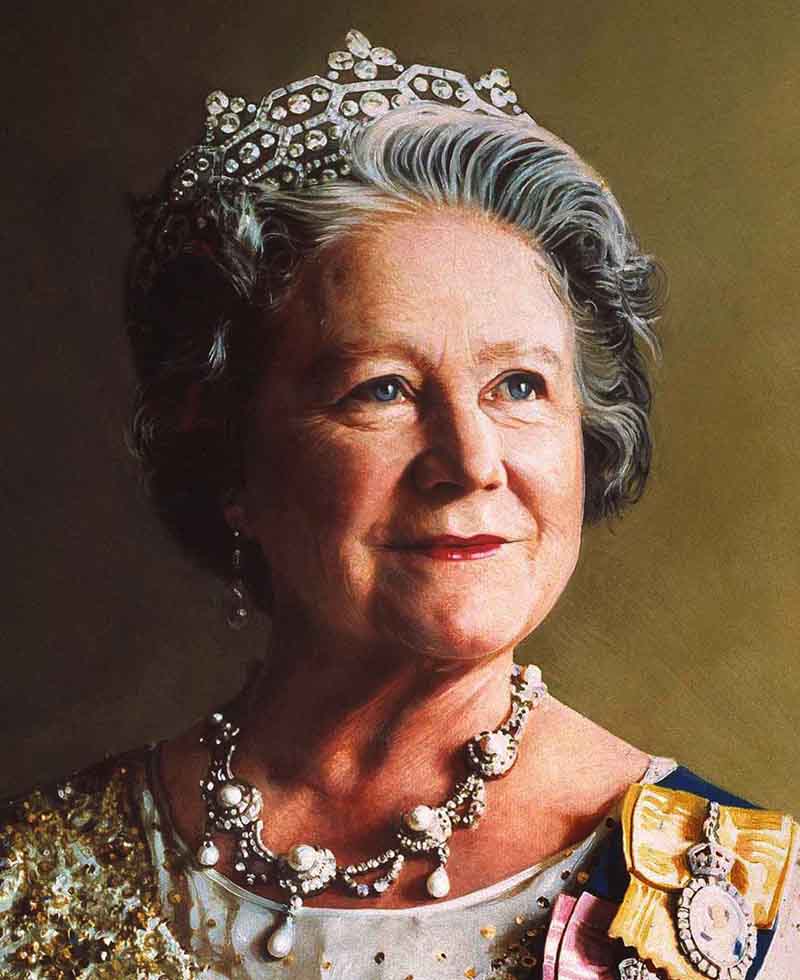 In “Royals Kept Windsors in Exile,” published by BBC News Online on January 30, 2003, journalist Paul Reynolds examines newly released British government documents showing how the Royal Family and senior officials worked to keep the Duke and Duchess of Windsor at a distance from Britain after the abdication crisis of 1936.
The Duke of Windsor, formerly King Edward VIII, gave up the throne in order to marry Wallis Simpson, an American divorcée. The documents reveal that his younger brother, King George VI, strongly opposed the couple returning to Britain together. In a 1938 letter to Prime Minister Neville Chamberlain, the King said there was widespread public resistance to a visit by the Duke if he were accompanied by the Duchess. George VI also stated that neither his wife, Queen Elizabeth—the future Queen Mother—nor his mother, Queen Mary, wished to meet the Duchess.
The files also show that the Royal Family supported the decision to deny Wallis Simpson the title “Her Royal Highness.” Home Secretary Sir John Simon wrote that the King, Queen, and Queen Mary all wanted the legal position established clearly. The Duke protested repeatedly, arguing that the refusal to grant his wife royal status was insulting and based on false stories spread about her.
Tensions also arose over the Duke’s right to return to Britain. When Chamberlain suggested that he visit without his wife, the Duke rejected the idea, insisting that married couples should not be separated. He blamed the Royal Family for any controversy that might result from his return and declared that their hostility toward his wife should not be used to keep him out of his own country.
Because of their attitude towards my wife and myself, I blame the Royal Family for any controversy which might arise on my return.
– Duke of Windsor
Financial pressure was another means of limiting the Duke’s freedom. He received an annual allowance of approximately £25,000 from King George VI, but the continuation of that payment depended on his not returning to Britain without royal approval. The Duke condemned this condition as unfair and intolerable, saying it amounted to being paid to remain in exile. His objections did not change the King’s position.
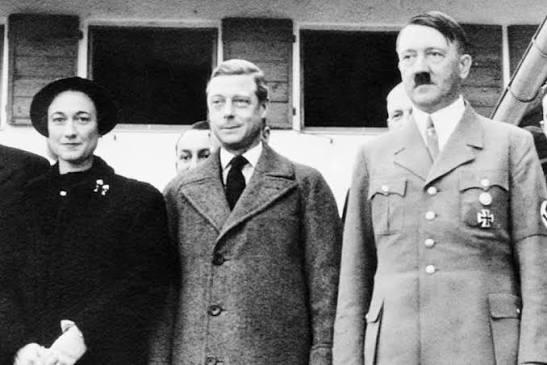 The British government was also alarmed by the Duke and Duchess’s political behavior. In 1937, they visited Adolf Hitler in Germany. The Foreign Office instructed the British ambassador in Berlin not to treat them as official representatives and ordered that only a junior diplomat meet them. Documents indicate that the Duchess anticipated meeting Hitler, although the files provide no evidence of deeper Nazi involvement beyond planning the visit.
Some officials viewed Wallis Simpson with particular hostility. Sir Horace Wilson, an adviser to Prime Minister Stanley Baldwin, suspected that she intended to establish a rival court and undermine the new king. Yet the records also reveal Edward VIII’s unwavering devotion to her. When Baldwin asked whether even an archangel could persuade him to give her up, Edward replied, “Not the least.”
It is clear to me that it is her intention … to set up a court of her own and … do her best to make things uncomfortable for the new occupants of the throne. It must not be assumed that she has abandoned hope of becoming Queen of England.– Sir Horace Wilson
Source: Paul Reynolds, BBC News Online, January 30, 2003.
Original article: http://news.bbc.co.uk/1/hi/uk/2706723.stm
Secret Lover Revealed
Summary of “Mrs Simpson’s Secret Lover Revealed” by Paul Reynolds, BBC News Online

In “Mrs Simpson’s Secret Lover Revealed,” published by BBC News Online on January 30, 2003, journalist Paul Reynolds reports on newly released British government and police files concerning Wallis Simpson and the 1936 abdication crisis. The documents, made public by the Public Record Office, reveal that Simpson was closely monitored by Special Branch officers while she was involved with Edward, Prince of Wales, who later became King Edward VIII.
According to the files, Simpson was believed to have had a secret affair with Guy Marcus Trundle, a married car salesman from York. Police described Trundle as handsome, charming, well bred, an excellent dancer, and something of an adventurer. A Special Branch report from June 1935 stated that officers were trying to identify Simpson’s secret lover while maintaining surveillance on her and her husband, Ernest Simpson. By July, police claimed to have confirmed Trundle’s identity and alleged that he and Simpson arranged private meetings.
The reports suggested that Simpson was careful to conceal the relationship from both her husband and the Prince of Wales. Police believed she was anxious not to lose Edward’s affection, partly because of the financial and social advantages associated with their relationship. The documents compared her situation with that of Thelma Furness, another American woman who had previously been involved with Edward before he left her for Simpson.
The records also reveal the intrusive and judgmental nature of official surveillance. Special Branch officers gathered information not only about Simpson but also about her husband, friends, and acquaintances. Reports contained harsh descriptions, gossip, and prejudiced observations about prominent members of her social circle, including Lady Emerald Cunard, Sir Oswald Mosley, and Nancy Cunard. The language used in some reports reflects the social attitudes and biases of British establishment figures during the 1930s.
Reynolds explains that these police files help show why Simpson was viewed with suspicion and hostility by many members of the British government and Royal Family. She was considered socially unsuitable to become queen, and concerns about her conduct, relationships, and political associations contributed to the controversy surrounding Edward’s desire to marry her.
Other documents concern Simpson’s divorce from Ernest Simpson. Officials investigated whether the divorce had been deliberately arranged, a common legal concern at the time. Crew members from the yacht Nahlin, on which Edward and Simpson traveled together in 1936, were interviewed. Although Simpson’s cabin was near Edward’s, the staff described her behavior as respectable and reported nothing improper.
Ernest Simpson also described an emotional meeting with Edward in which the King confessed his love for Wallis and broke down. Ernest reportedly called him a “madman.” Despite suspicions and allegations, the divorce proceeded. Edward later abdicated the throne in order to marry Wallis Simpson, creating one of the most famous constitutional crises in modern British history.
Source: Paul Reynolds, BBC News Online, January 30, 2003.
Original article: http://news.bbc.co.uk/1/hi/uk/2706889.stm
Appeal to the Nation
Summary of “King’s Abdication Appeal Blocked” by Dominic Casciani, BBC News Online
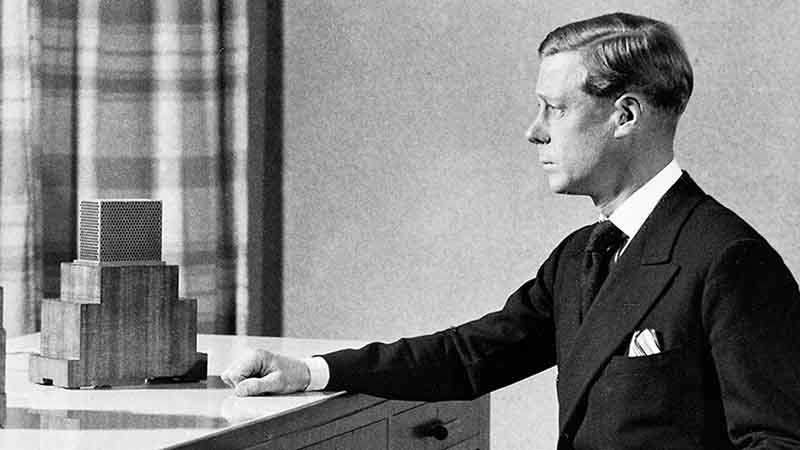
In “King’s Abdication Appeal Blocked,” published by BBC News Online on January 30, 2003, journalist Dominic Casciani examines newly released documents from the Public Record Office concerning King Edward VIII’s attempt to appeal directly to the British public during the abdication crisis of 1936. The papers reveal that Edward wanted to make a radio broadcast to defend his decision to marry Wallis Simpson and to gather public support for remaining on the throne.
The proposed broadcast came at a moment when British newspapers were ending their silence about the King’s relationship with Simpson, an American divorcée. On December 3, 1936, Edward met with Prime Minister Stanley Baldwin and asked for permission to speak to the nation through the BBC. The draft speech, which had not previously been made public, was written as a personal appeal to people throughout Britain and the Empire.
I could not go on bearing the heavy burdens unless I could be strengthened in the task by a happy married life …– King Edward VIII
Edward proposed leaving Britain temporarily while the public considered his position. He hoped that popular sympathy might make it possible for him to return and continue as king. He ended the draft by expressing his continuing love for Britain, the Empire, and his subjects, regardless of the outcome.
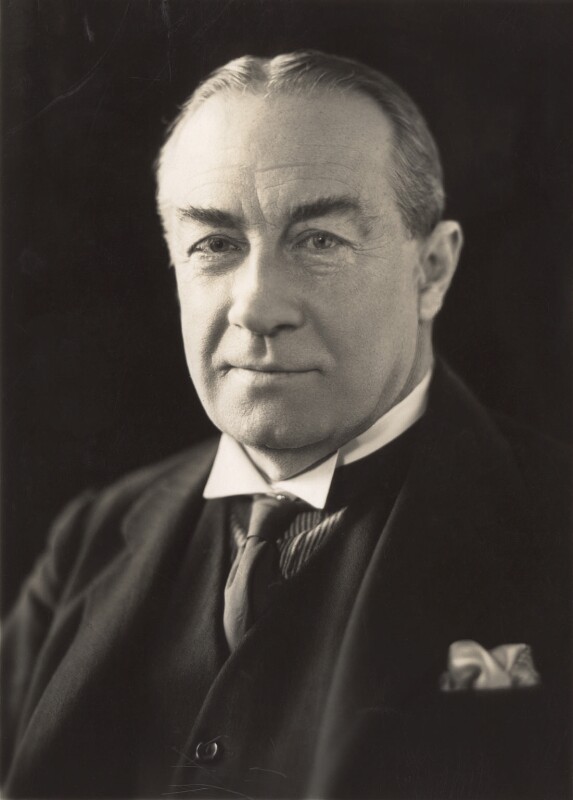
Baldwin regarded the proposed broadcast as a direct threat to constitutional government. He quickly contacted the leaders of Canada, Australia, New Zealand, and South Africa to secure a united response. The central constitutional issue was that the monarch could not act or speak publicly on matters of national importance without ministerial approval. Because the King represented the unity of Britain and the Empire, his public statements had to be made on the advice of the government.
Baldwin also moved to prevent Edward from approaching the BBC independently. Sir Horace Wilson, a senior government adviser, met BBC Director General Sir John Reith and obtained an assurance that the BBC would not permit the King to broadcast without government authorization.
Government legal experts strongly supported Baldwin’s position. They argued that allowing the King to appeal directly to the people over the heads of his ministers would undermine the foundations of constitutional monarchy. One legal opinion compared such an act to King Charles I raising his standard in 1642 at the beginning of the English Civil War.
The government successfully blocked the broadcast. Within days, Edward abdicated rather than abandon his plan to marry Wallis Simpson. On December 11, 1936, he delivered a different radio address explaining that he could not continue as king without the woman he loved. Casciani concludes by noting that another major royal figure would not speak so publicly about a controversial personal relationship until Princess Diana’s 1995 BBC interview.
Source: Dominic Casciani, BBC News Online, January 30, 2003.
Original article: http://news.bbc.co.uk/1/hi/uk/2707489.stm
Media Coverup
Summary of “How the Media Covered Up the Scandal” by Dominic Casciani, BBC News Online
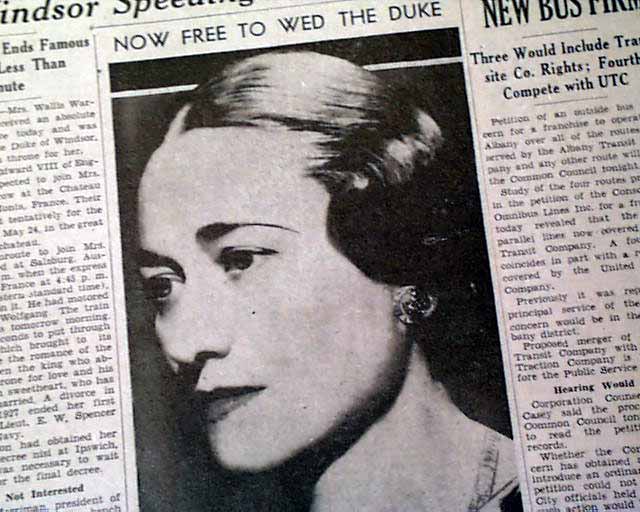 In “How the Media Covered Up the Scandal,” published by BBC News Online on January 30, 2003, journalist Dominic Casciani examines how British newspapers and the BBC suppressed reporting about King Edward VIII’s relationship with Wallis Simpson during the months leading to the 1936 abdication crisis. Drawing on documents released by the Public Record Office, Casciani shows that the British media knew far more than it told the public.
Throughout the summer of 1936, Edward’s relationship with Simpson, an American socialite who was still married, was widely reported in the United States and Europe. In Britain, however, the story was largely ignored. Although newspapers possessed detailed information, editors exercised what became known as “the Great Silence.” A few publications hinted at the relationship, and some printed photographs showing Simpson with the King during a Mediterranean holiday, but the major national and regional newspapers avoided discussing the scandal directly.
Some editors have urged me to break what they term ‘the Great Silence’ … In each case I have strongly urged on my friends the need for continued restraint and silence– HA Gwynne, Morning Post editor
One important figure was Esmond Harmsworth, a member of the newspaper-owning family behind the Daily Mail. He was both chairman of the Newspaper Proprietors Association and a personal friend of Edward. Although he privately supported the King’s right to marry Simpson, the press organization he led maintained public silence.
The secrecy became increasingly difficult to preserve. British citizens traveling abroad read foreign coverage and sent newspaper clippings home. Readers then began asking British editors why their own newspapers were refusing to discuss the story. Howell Arthur Gwynne, editor of the Morning Post, warned Prime Minister Stanley Baldwin that pressure was growing. Although some fellow editors wanted to break the silence, Gwynne urged continued restraint, arguing that the press should follow the government rather than lead it. At the same time, he recognized that the silence could not last indefinitely.
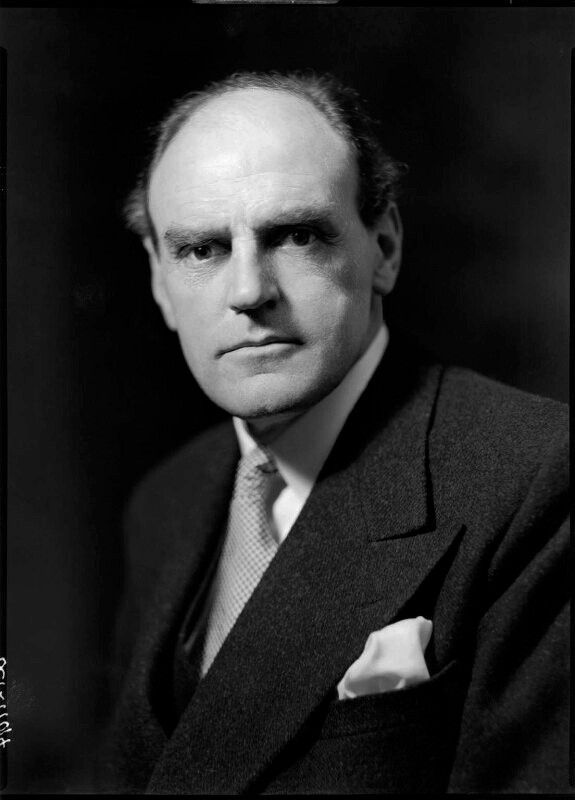
The story finally broke in Britain on December 1, 1936, after the Yorkshire Post reported a speech by the Bishop of Bradford that indirectly criticized the King’s conduct. Once the issue appeared in a British newspaper, the London national press could no longer avoid it, and the abdication crisis quickly became front-page news.
The BBC also cooperated closely with the government. When Edward considered broadcasting an appeal to the public, Baldwin’s adviser secured an assurance from BBC Director-General Sir John Reith that no broadcast would occur without government approval. Even after the abdication, Reith worked privately with American broadcasters to prevent a recorded interview with the Duke of Windsor from being offered to the BBC.
Casciani’s article reveals a media culture shaped less by investigative independence than by loyalty, caution, and deference to authority.
Source: Dominic Casciani, BBC News Online, January 30, 2003.
Original article: http://news.bbc.co.uk/2/hi/uk_news/2707571.stm
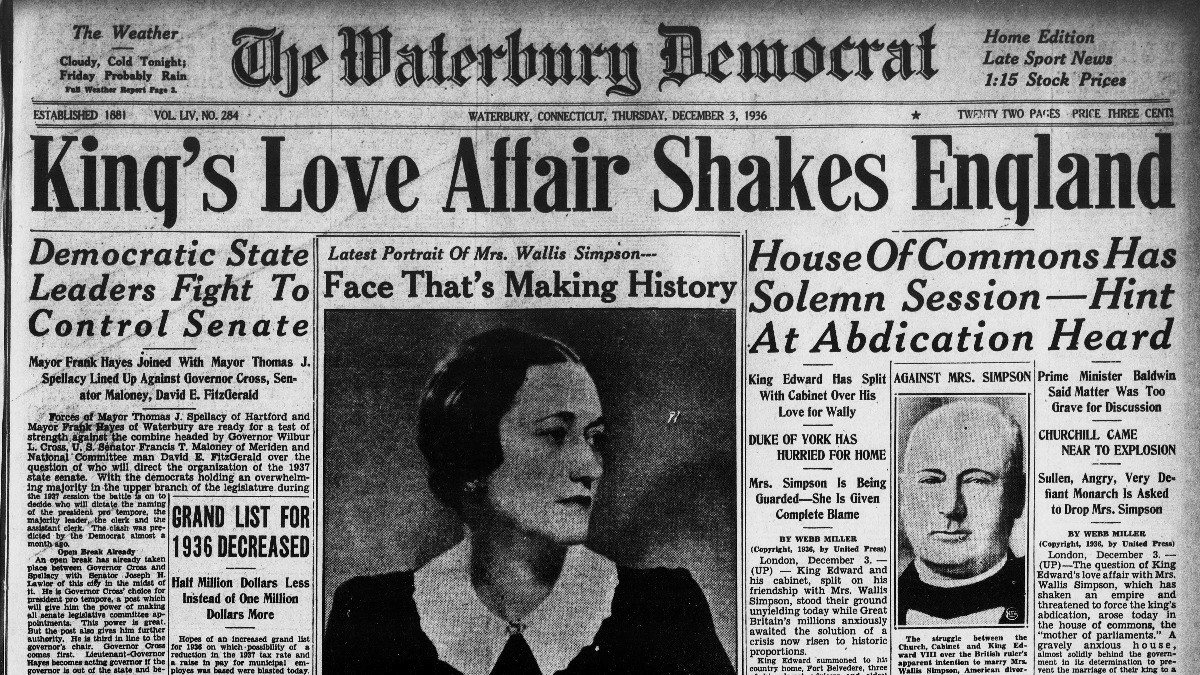
Simpson's Nazi Past Led to Abdication
Summary of “Simpson’s ‘Nazi Past’ Led to Abdication” by Emma Simpson, BBC News
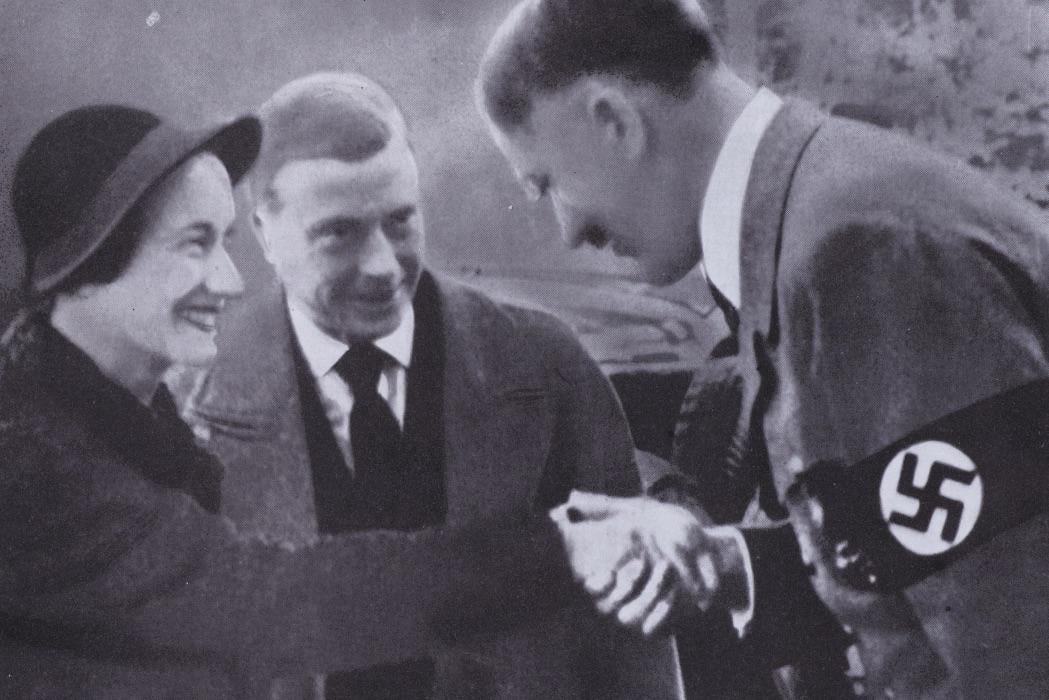
In “Simpson’s ‘Nazi Past’ Led to Abdication,” BBC New York correspondent Emma Simpson reports on newly released FBI files suggesting that Wallis Simpson’s alleged connections to Nazi Germany may have played a greater role in the abdication crisis of 1936 than was previously understood. The documents challenge the traditional explanation that King Edward VIII was forced to give up the throne primarily because Simpson was an American divorcée whose marriage to the monarch was considered constitutionally and socially unacceptable.
Edward VIII abdicated in December 1936 after the British government, the Church of England, and leading political figures opposed his proposed marriage to Simpson. The couple married in France the following year, after Edward had become the Duke of Windsor. For decades, the central issue was generally presented as Simpson’s marital history and the difficulty of allowing a king, who was also head of the Church of England, to marry a woman whose former husbands were still living.
The FBI documents, written during the 1940s and later released under the United States Freedom of Information Act, suggest that British officials may also have been deeply concerned about Simpson’s political sympathies. According to one memorandum, the government of Prime Minister Stanley Baldwin had known for some time that she was strongly sympathetic toward Germany. The FBI believed that British authorities found her so objectionable that they would not permit Edward to marry her while he remained king.

Simpson cautions, however, that the files do not provide conclusive proof. They consist of a mixture of surveillance reports, information from unnamed sources, allegations, and hearsay. Their claims therefore must be treated carefully. Even so, the documents add to longstanding suspicions about the political views and associations of the Duke and Duchess of Windsor.
The couple’s conduct after the abdication contributed to those suspicions. In 1937, they traveled to Germany and met Adolf Hitler, a visit that later became highly controversial. Other reports claimed that Wallis Simpson may have had an affair with a senior Nazi official and may even have passed confidential information to him. These allegations reportedly led the FBI to monitor the couple while they were living abroad.
The article also notes that surveillance may have been ordered after United States President Franklin D. Roosevelt became concerned about the Duke and Duchess’s political beliefs. Their apparent friendliness toward Germany was especially troubling as Europe moved toward war and later as Britain and the United States fought Nazi Germany.
The newly released files do not establish that Wallis Simpson was a Nazi agent or that her alleged German connections were the sole cause of Edward’s abdication. They do, however, suggest that political and national-security concerns may have existed alongside the better-known constitutional objections. Emma Simpson’s report therefore presents the abdication not simply as a romantic conflict over marriage, but as a crisis involving questions of loyalty, political judgment, and the security of the British monarchy.
Source: Emma Simpson, BBC News, “Simpson’s ‘Nazi Past’ Led to Abdication.”
Original article: http://news.bbc.co.uk/2/hi/uk_news/2644123.stm
Abdication Letters Secret